
Protecting Phones: Glass and Screen Replacement
Read Part One Looking ahead… 2019 the smartphone market was valued at $714.96 billion. US dollars and it is predicted that by 2025 it will exceed 1351.8 billion. US dollars, and in the forecast period of 2020-2025 will increase by 11.2 percent during the period. Significant increases in smartphone sales have been fueled by increased consumer spending in various regions for many years. However, despite the intensive sk
Read the first part
Looking to the future…
in 2019 the smartphone market was valued at $714.96 billion. US dollars and it is predicted that by 2025 it will exceed 1351.8 billion. US dollars, and in the forecast period of 2020-2025 will increase by 11.2 percent during the period. Significant increases in smartphone sales have been fueled by increased consumer spending in various regions for many years. However, despite the intensive level of penetration, the market growth is not changing
For example, 91 percent smartphones in US households in different price categories are equipped with the most important functions. Smartphone shipments have fallen due to the COVID-19 outbreak as countries continue to grapple with the pandemic. According to the study, unit shipments of smartphones fell 15.7% year-over-year from 331.8 million. in 2019 II quarter up to 279.7 million in 2020 II quarter
IDC's forecasted growth is 2020. a total of 1.34 billion will enter the global smartphone market. units, i.e. i.e. 2.3 percent less than in 2019, when 1.37 billion were delivered. units. In 2024, the last year of our forecast period, supplies will reach 1.51 billion. units, which will lead to 2.0 percent. annual growth rate.
"Considering our previous forecast, the impact on the supply chain that led to a reduction in 1H 2020 shipments was not expected from COVID-19," said Anthony Scarsella, head of research at IDC's Worldwide Quarterly Smartphone Tracker. "Logistics, labor and transportation are likely to remain affected by the virus for weeks, if not months. As a result, COVID-19 has already begun to shape the
Needs and requirements for screen protectors
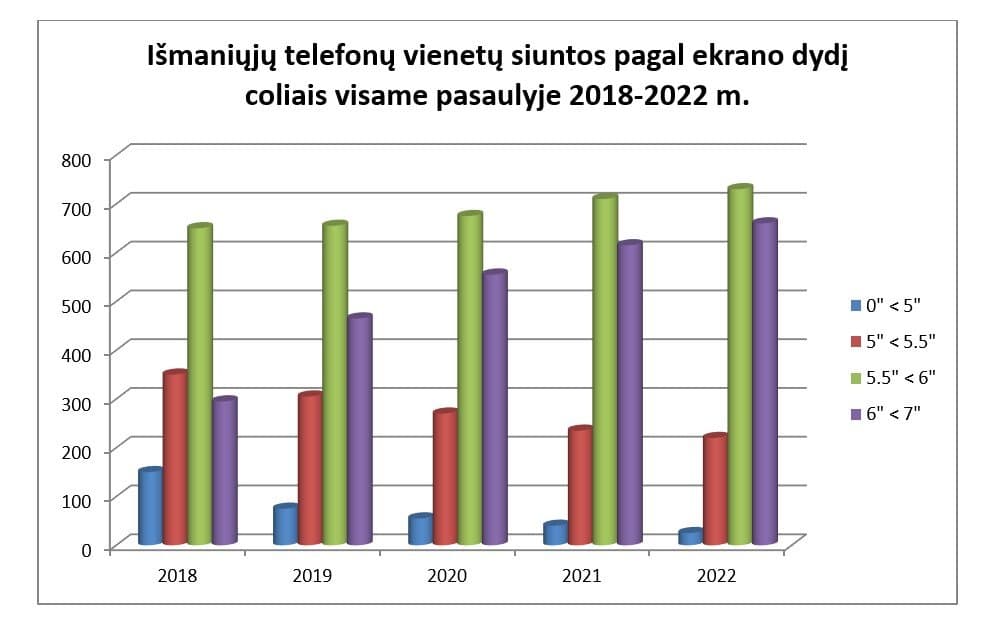
Source: https://www.statista.com/statistics/684294/global-smartphone-shipments-by-screen-size/
The need for screen protectors has always grown and will continue to grow. People are concerned about the safety of their smartphones against potential damage from high impact drops and scratches on the screen. This, in turn, will positively affect the demand for screen protectors.
Screen protection is an integral part of the smartphone buying cycle. The high price of smartphones and the risk of screen damage created the conditions for increased sales of screen protectors. The demand for screen protectors is expected to grow exponentially due to the increasing number of shipments driven by e-commerce. trade industry. Due to the increasing demand for used smartphones, the demand for screen protectors is also expected to increase
Source: https://www.statista.com/statistics/994802/worldwide-smartphone-display-shipment-share-by-shape/
Alternatives to Screen Protectors: Screen Replacement
Your phone's screen can be protected from shattering, but there are a few other ways to minimize damage to your phone's screen when you accidentally drop it. One of them that is commonly used by everyone is the use of screen glass. Other ways customers use to protect their smartphones include using a Bumper case, Pop Sockets, a phone holder in a car or a case on the phone to keep it
Bumper case
As technology has evolved, several companies have offered powerful and durable bumper cases for almost every model from the major phone manufacturers. This is due to the increased need and demand for bumper cases for smartphones. There are generally two types of cases available in the market. One of them is fashionable and bright. These cases are only strong enough to protect your phone from minor scratches and bumps
The main disadvantage of the bumper case is that low-quality materials can be used to make the cases, so you are not guaranteed the quality of the product. It also adds weight to the device itself.
"Pop Sockets"
"Pop Sockets" are plastic devices that attach to the back of the phone. They have a round base, a stylish disc and a flexible stem. You can grab the "pop socket" attached to the phone with one or two fingers and immediately feel a better grip and the fact that the phone holds better in your hand. The advantage of using the Pop Socket is that you can comfortably work on the phone with only
Film for extra grip
One of the easiest ways to increase the grip of the phone on the surface is to put a film on the phone. This is another cost-effective solution that can save your phone's screen and avoid the extra cost of repairing a damaged screen. Sometimes it is not possible to meet the expectations of customers, i.e. i.e. protect the screen from damage. Heavy drops can eventually damage the phone, regardless of size
Source: https://www.statista.com/statistics/1034641/smartphone-display-shipments-by-technology-worldwide/
Car phone holder
Navigation, texting or taking part in calls may be reasons for using the phone in the car. The law prohibits the use of mobile phones while driving. With a car phone holder, you will be able to use your phone without losing the ability to use it for navigation, listening to music and other purposes. This is another promising solution, let
Screen protectors: facts and figures
We are currently living in the most advanced age of science and technology. However, an unbreakable smartphone is just a dream. According to the latest report, last year the British spent more than 680 million pounds just to fix their phone screens . After conducting a survey of 2,000 mobile phone users, it was found that 53 percent of them just to fix their phones,
More than a third of mobile phone users are currently using smashed, damaged or broken phones, according to a study of the phone repair market in the UK. In addition, more than half of smartphone users have damaged or completely broken their phones in the past three years.
The British phone accessories company Mous conducted a study during which they listened to several customer stories about how they managed to break their phone screens, according to one of the company's founders - Jams Griffith.
Most cell phone users drop their phone at least once, and some more than they can count. The causes of phone drops can vary as often as the customers who bring them in for repair change. Cracked screens, damaged cases or damaged cameras are some of the consequences of a fall, whether the phone fell on concrete, grass or the floor.
Another study found that a quarter of all crashes occur during a night out, showing how strongly alcohol consumption and phone use are linked. A combination of heavy drinking, dancing (vigorous dancing with the phone in a shallow pocket) or posing for photos also results in dropped phones.
Another major cause of accidental phone damage is taking selfies. One in five smartphone accidents happen during this common procedure, resulting in broken screens, cracked back covers or even damaged motherboards.
Another major cause of phone damage is dropping the device in the toilet, which you probably expected. The study showed that after throwing it in the toilet, 10% of users damage their smartphone because even the most waterproof phones cannot withstand complete submersion in water (especially for long periods of time).
Back in the days when Nokia devices reigned in the market, which were characterized by significantly higher resistance to physical impacts, damaged phones were not so common. Nowadays, smartphone screens are usually made of glass or plastic, which makes them much more sensitive to impacts. Therefore, it is very important to take precautions and insure your device.
Source: https://www.statista.com/statistics/959492/us-top-common-smartphone-damage-cause/
Screen Protectors: Smartphone Shields
Screen protectors are made from plastic, such as polyethylene terephthalate (PET) or thermoplastic polyurethane (TPU), or from tempered laminated glass identical to the original screen of the system they are designed to protect.
Plastic screen protectors cost less than glass and are thinner and more durable (approximately 0.1 mm (0.004 in) thick compared to 0.3-0.5 mm (0.012-0.020 in) thick glass). For the same price, glass is more scratch-resistant than plastic and looks more like the screen of the device, although higher-quality plastic protectors are better than the cheapest tempered glass
Due to various factors, high-quality tempered glass is one of the best screen protectors: it transmits light well, the screen is clearly visible, anti-reflective and reduces reflections. Most tempered glass has the same look and feel as your cell phone screen, so you won't even notice it's on.
© 2023, MB "ELEKTRONIKOS RATEYSKLA", all rights reserved. Any copying, distribution or republication of this article without the written consent of MB "ELEKTRONIKOS TAYYSKLA" is prohibited.